High-Impact Practices (HIPs) are dedicated strategies transforming student learning, vital for advancing mathematics education through proven techniques and fostering positive perceptions.
The Current Landscape of Mathematics Education
Mathematics education currently faces challenges in student engagement and conceptual understanding, demanding innovative approaches. Traditional methods often prioritize procedural knowledge over deeper comprehension, leading to difficulties in applying skills to real-world scenarios. Recent research highlights the significant influence of factors like study habits, class participation, and, crucially, a student’s perception of mathematics – interest, usefulness, and self-concept – on academic performance.
There’s a growing recognition of the detrimental impact of math anxiety, necessitating strategies to build confidence. Educators are increasingly exploring High-Impact Practices (HIPs), driven by dedicated faculty, to address these issues and transform learning experiences. These practices aim to move beyond rote memorization, fostering mathematical thinking and reasoning through techniques like problem-based learning and utilizing tools like GeoGebra.
Defining High-Impact Practices (HIPs) in Math
High-Impact Practices (HIPs) in mathematics are evidence-based teaching strategies demonstrably linked to increased student learning and retention. These aren’t simply “new” techniques, but rather intentionally designed approaches focused on actively engaging students in the learning process. Key characteristics include promoting mathematical thinking, fostering conceptual understanding, and addressing affective factors like math anxiety.
HIPs encompass a range of methods, from problem-based learning and inquiry-based learning to leveraging technology like GeoGebra. Crucially, they emphasize personalizing instruction through student choice and encouraging math talk to develop deeper comprehension. Effective implementation requires careful planning, formative assessment, and timely feedback, all geared towards building a strong foundation of both procedural knowledge and conceptual understanding.
Cognitive and Metacognitive Strategies
Cognitive strategies, like concept mapping, enhance understanding, while metacognitive approaches empower students to reflect on their thinking and reasoning processes.
Promoting Mathematical Thinking and Reasoning
Cultivating robust mathematical thinking necessitates moving beyond rote memorization and fostering a classroom environment where reasoning takes center stage. Effective strategies involve presenting students with challenging problems that demand critical analysis and justification of their solutions.
Encouraging students to articulate their thought processes – through math talk and collaborative problem-solving – is paramount. This allows educators to identify misconceptions and guide students toward deeper conceptual understanding. Furthermore, personalizing instruction through student choice empowers learners to engage with mathematical concepts in ways that resonate with their individual learning styles and interests.
Ultimately, the goal is to equip students with the ability to not only solve problems but also to understand why their solutions are valid, fostering a lifelong appreciation for the power of mathematical reasoning.
Utilizing Concept Mapping for Deeper Understanding
Concept mapping stands as a powerful visual tool for enhancing comprehension in mathematics, facilitating meaningful connections between ideas and fostering a more holistic understanding of complex topics. This strategy encourages students to actively organize and represent their knowledge, revealing relationships that might otherwise remain hidden.
By constructing concept maps, students move beyond simply memorizing facts and procedures; they begin to see the interconnectedness of mathematical concepts. This process promotes deeper learning and improves retention. Research indicates that concept mapping can significantly improve academic performance, particularly when used as a collaborative activity.
It allows students to visualize the structure of mathematical knowledge, leading to a more robust and lasting grasp of the subject matter.
Fostering Math Talk and Conceptual Development
Engaging students in math talk is a cornerstone of effective mathematics instruction, shifting the focus from rote memorization to genuine conceptual understanding. This practice involves creating a classroom environment where students feel safe and encouraged to articulate their mathematical thinking, explain their reasoning, and critique the ideas of others.
Through purposeful discussions, students refine their understanding, clarify misconceptions, and build a stronger foundation in mathematical concepts. Key strategies include posing open-ended questions, prompting students to justify their solutions, and facilitating peer-to-peer explanations.
Math talk isn’t simply about getting the right answer; it’s about the process of thinking mathematically and communicating that thinking effectively.
Personalizing Instruction Through Student Choice
Personalizing instruction through student choice is a powerful high-impact practice, recognizing that learners thrive when they have agency over their learning journey. This approach moves beyond a “one-size-fits-all” model, allowing students to select from a range of tasks, projects, or methods that align with their interests, strengths, and learning styles.
Offering choices can increase student motivation, engagement, and ownership of their mathematical understanding. For example, students might choose to solve a problem using different strategies, present their solutions in various formats, or explore extensions of a concept based on their curiosity.
This strategy fosters a more inclusive and equitable learning environment, catering to diverse needs and promoting deeper conceptual grasp.
Effective Pedagogical Approaches
Effective approaches include problem-based, inquiry-based learning, and leveraging tools like GeoGebra to explore complex concepts and real-world applications in math.
Problem-Based Learning in Mathematics
Problem-Based Learning (PBL) shifts the focus from teacher-led instruction to student-driven exploration, presenting real-world problems as the catalyst for learning. This approach encourages students to actively construct their own understanding of mathematical concepts by grappling with authentic challenges. Instead of directly receiving information, students collaborate to define the problem, identify knowledge gaps, research potential solutions, and ultimately, present their findings.
PBL fosters critical thinking, reasoning, and communication skills as students navigate the complexities of ill-defined problems. It necessitates the application of foundational math facts and procedures within a meaningful context, bridging the gap between procedural knowledge and conceptual understanding. By engaging in this iterative process, students develop a deeper, more robust comprehension of mathematical principles and their relevance beyond the classroom.
Inquiry-Based Learning and Student Exploration
Inquiry-Based Learning (IBL) empowers students to take ownership of their mathematical journey through exploration and discovery. Unlike traditional methods, IBL begins with a question or phenomenon, prompting students to formulate their own hypotheses, design investigations, collect and analyze data, and draw conclusions. This student-centered approach cultivates a deeper understanding of mathematical concepts by encouraging active participation and critical thinking.
IBL fosters mathematical reasoning and problem-solving skills as students navigate the complexities of open-ended investigations. It allows them to connect procedural knowledge to conceptual understanding, building a strong mental toolbox while simultaneously developing their ability to apply these tools in novel situations. Through guided exploration, students develop confidence and a positive perception of mathematics, reducing anxiety and fostering a lifelong love of learning.
The Role of GeoGebra in Teaching Complex Mathematical Concepts
GeoGebra is a dynamic mathematics software that bridges the gap between concrete and abstract concepts, proving invaluable in teaching complex topics. Its interactive environment allows students to visualize mathematical ideas, manipulate geometric objects, and explore relationships in a way that static textbooks cannot replicate. Particularly useful in higher mathematics for technical fields, GeoGebra facilitates a deeper understanding of concepts like complex numbers.
By providing a visual and interactive platform, GeoGebra enhances student engagement and promotes conceptual learning. It allows teachers to demonstrate abstract principles, students to experiment with different parameters, and both to collaboratively explore mathematical landscapes. This technology supports inquiry-based learning, fostering critical thinking and problem-solving skills, ultimately leading to improved mathematical achievement.
Integrating Real-World Applications in Math Lessons
Connecting mathematics to real-world scenarios is a cornerstone of high-impact instruction, enhancing student engagement and demonstrating the practical relevance of the subject. This approach moves beyond rote memorization, fostering a deeper conceptual understanding by showing students why math matters. Key strategies involve presenting problems rooted in everyday life, allowing students to see mathematics as a tool for solving authentic challenges.
Effective integration requires careful planning to ensure applications are meaningful and aligned with learning objectives. By applying mathematical principles to relatable contexts, students develop critical thinking skills and a positive perception of mathematics, improving their overall achievement. This fosters interest, usefulness, and a stronger self-concept within the subject.

Addressing Affective Factors
Reducing math anxiety and cultivating a positive perception are essential for strong conceptual learning outcomes, alongside building student confidence and self-concept.
Reducing Math Anxiety and Building Confidence
Addressing affective factors is crucial; recent research highlights the significant impact of math anxiety on student performance. Creating a supportive classroom environment where mistakes are viewed as learning opportunities is paramount.
Strategies include explicitly teaching growth mindset principles, emphasizing effort over innate ability, and providing opportunities for students to experience success with challenging problems.
Furthermore, incorporating collaborative learning activities can reduce anxiety by allowing students to support each other and build confidence through peer interaction.
Positive reinforcement and celebrating small victories contribute to a more positive perception of mathematics, fostering a belief in one’s ability to learn and succeed. Ultimately, building confidence is key to unlocking mathematical potential.
Cultivating a Positive Perception of Mathematics
A positive perception of mathematics – encompassing interest, usefulness, and self-concept – is essential for strong conceptual learning outcomes. Shifting away from rote memorization and towards meaningful understanding is vital.
Highlighting the relevance of mathematical concepts to real-world applications can demonstrate its practical value and increase student engagement. Connecting math to students’ interests and experiences fosters a sense of ownership and purpose.
Emphasizing the creative and problem-solving aspects of mathematics can challenge negative stereotypes and showcase its intellectual beauty.
Encouraging students to articulate their mathematical thinking and celebrate diverse approaches builds a classroom culture that values exploration and innovation, ultimately fostering a more positive attitude towards the subject.
The Impact of Self-Concept on Math Achievement
A student’s self-concept in mathematics – their beliefs about their abilities – profoundly impacts their achievement. Those with a strong mathematical self-concept tend to approach challenges with greater confidence and persistence, leading to improved performance.
High-Impact Practices should actively nurture this self-belief. Providing opportunities for success, even with appropriately scaffolded tasks, builds competence and reinforces positive self-perceptions.
Creating a supportive classroom environment where mistakes are viewed as learning opportunities, rather than failures, is crucial.
Encouraging students to reflect on their progress and celebrate their accomplishments fosters a growth mindset and strengthens their belief in their mathematical potential, ultimately driving greater academic success.

Assessment and Feedback
Formative assessment and timely feedback are essential for real-time monitoring of student understanding, informing instruction and maximizing learning outcomes in mathematics.
Formative Assessment Techniques for Real-Time Monitoring
Effective formative assessment goes beyond traditional testing, providing educators with continuous insights into student learning. Techniques like quick checks for understanding – think-pair-share, exit tickets, or brief polls – offer immediate feedback on comprehension. Observing student participation in math talk reveals conceptual grasp and reasoning skills. Utilizing questioning strategies that probe deeper than recall, encouraging explanation and justification, is crucial.
Furthermore, analyzing student work in progress, not just completed assignments, allows for targeted intervention. Observing how students approach problem-solving, identifying common errors, and providing immediate guidance are key. These techniques enable teachers to adjust instruction dynamically, addressing misconceptions and ensuring all students are progressing. Data gathered informs instructional decisions, fostering a responsive and effective learning environment.
Providing Effective and Timely Feedback
Effective feedback in mathematics isn’t simply grading; it’s a crucial instructional tool. Timely feedback – delivered while concepts are still fresh – maximizes impact. It should be specific, focusing on the how and why of errors, not just marking them incorrect. Instead of “wrong answer,” try “Check your application of the distributive property here.”
Feedback should also be actionable, guiding students toward improvement. Offer suggestions, prompts, or resources to help them correct misunderstandings. Encourage self-reflection by asking students to identify their own errors. Positive reinforcement, acknowledging effort and progress, builds confidence. This approach fosters a growth mindset, where mistakes are seen as opportunities for learning, ultimately enhancing mathematical understanding.
Using Assessment Data to Inform Instruction
Assessment data is more than just scores; it’s a roadmap for effective teaching. Regularly analyzing formative assessment results – quick checks for understanding – reveals learning gaps in real-time. This allows teachers to adjust instruction proactively, re-teaching concepts where students struggle and accelerating those who grasp them quickly.
Identifying patterns in errors helps pinpoint common misconceptions. Are students consistently misapplying a specific formula? Do they struggle with a particular type of problem? This informs targeted interventions and small-group instruction. Data-driven decisions ensure that teaching is responsive to student needs, maximizing learning outcomes and fostering a more equitable classroom environment. It’s about using evidence to guide pedagogical choices.

Classroom Management and Engagement
Effective engagement stems from clear goals, active participation, and summarizing learning graphically – strategies that maximize student involvement and retention in mathematics.
Strategies for Maximizing Student Participation
Maximizing student participation is crucial for a dynamic learning environment. Implementing “math talk” encourages students to articulate their reasoning and deepen conceptual understanding. This fosters a collaborative atmosphere where diverse perspectives are valued, and students build confidence in their mathematical abilities.
Furthermore, personalizing instruction through student choice empowers learners and increases engagement. Offering varied problem-solving approaches or allowing students to select topics aligned with their interests can significantly boost motivation. Active learning strategies, like problem-based and inquiry-based learning, require students to actively construct knowledge, rather than passively receiving information.
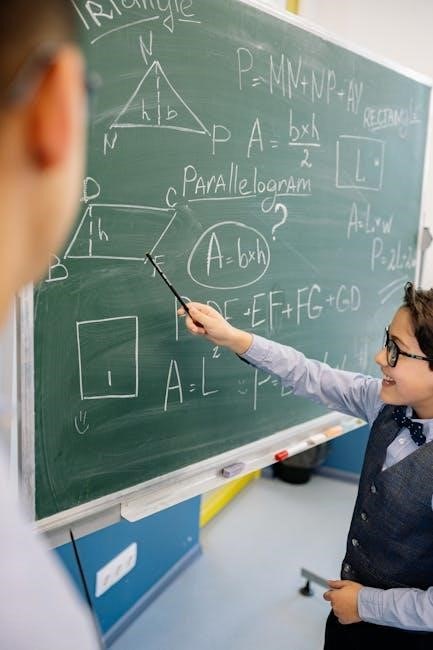
Creating a safe and supportive classroom climate where students feel comfortable taking risks and sharing their ideas is paramount. Regularly checking for understanding and providing timely feedback ensures all students are actively involved and progressing towards mastery.
Establishing Clear Lesson Goals and Objectives
Clearly defined lesson goals and objectives are foundational to effective mathematics instruction. Students benefit significantly when teachers explicitly communicate what they are expected to learn and be able to do. This transparency provides a roadmap for learning, allowing students to focus their efforts and monitor their progress.
Beginning lessons by “showing and telling” – explicitly connecting new concepts to prior knowledge – helps students build a strong conceptual framework. This approach bridges the gap between the familiar and the unfamiliar, making learning more accessible.
Furthermore, aligning objectives with assessment strategies ensures that evaluation accurately measures student understanding of the intended learning outcomes. Regularly revisiting and reinforcing these goals throughout the lesson solidifies comprehension and promotes retention.
Summarizing Learning Graphically for Retention
Graphical summaries serve as powerful tools for consolidating mathematical understanding and enhancing long-term retention. Visual representations, such as concept maps, diagrams, or flowcharts, help students organize information and identify key relationships between concepts. This process moves beyond rote memorization towards deeper, more meaningful learning.
Employing graphic organizers allows students to actively synthesize information, reinforcing their comprehension. These visual aids cater to diverse learning styles and provide a readily accessible reference point for review.
Integrating graphical summaries as a regular component of lessons, particularly at the end, solidifies learning and promotes a more holistic understanding of mathematical principles. This practice supports both immediate recall and future application of knowledge.

The Importance of Foundational Skills
Building a strong mental toolbox of math facts and procedures is crucial; however, connecting these skills to conceptual understanding is equally vital for success;
Building a Strong Mental Toolbox of Math Facts and Procedures
Establishing a firm grasp of fundamental math facts and procedures forms the bedrock of mathematical proficiency. Students require consistent practice and reinforcement to achieve automaticity with these core skills. However, simply memorizing facts in isolation isn’t enough. Effective instruction emphasizes the why behind the what, connecting procedural fluency to deeper conceptual understanding.
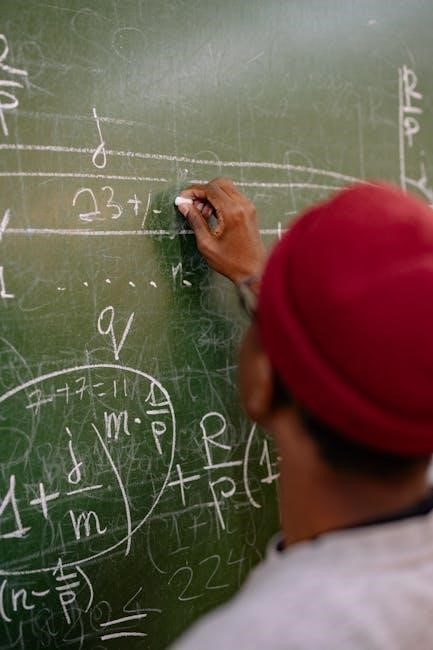
A robust “mental toolbox” allows students to efficiently tackle complex problems, freeing up cognitive resources for higher-order thinking. This involves not only knowing how to perform calculations but also when and why a particular strategy is appropriate. Teachers should employ varied methods – games, drills, and real-world applications – to solidify these foundational skills, ensuring students can readily access and apply them.
Connecting Procedural Knowledge to Conceptual Understanding
Bridging the gap between knowing how to solve a problem and understanding why the method works is crucial for lasting mathematical learning. Students often struggle when they can recall procedures but lack the conceptual foundation to apply them flexibly or troubleshoot errors. High-impact instruction prioritizes making these connections explicit.
This involves utilizing visual models, manipulatives, and real-world contexts to illustrate the underlying mathematical principles. Teachers should consistently prompt students to explain their reasoning, justifying each step in a procedure. Furthermore, exploring multiple solution strategies fosters a deeper understanding of the concepts and encourages mathematical thinking. Ultimately, the goal is to move beyond rote memorization towards a robust and interconnected understanding of mathematics.